Every landscape leaves its own signature. At Wenwe Ceramics, I am interested in how that signature can be carried onto the surface of a pot. My glazes are developed around the same idea as my clay: using materials connected to Zimbabwe’s landscapes and allowing their natural characteristics to become part of the finished piece.
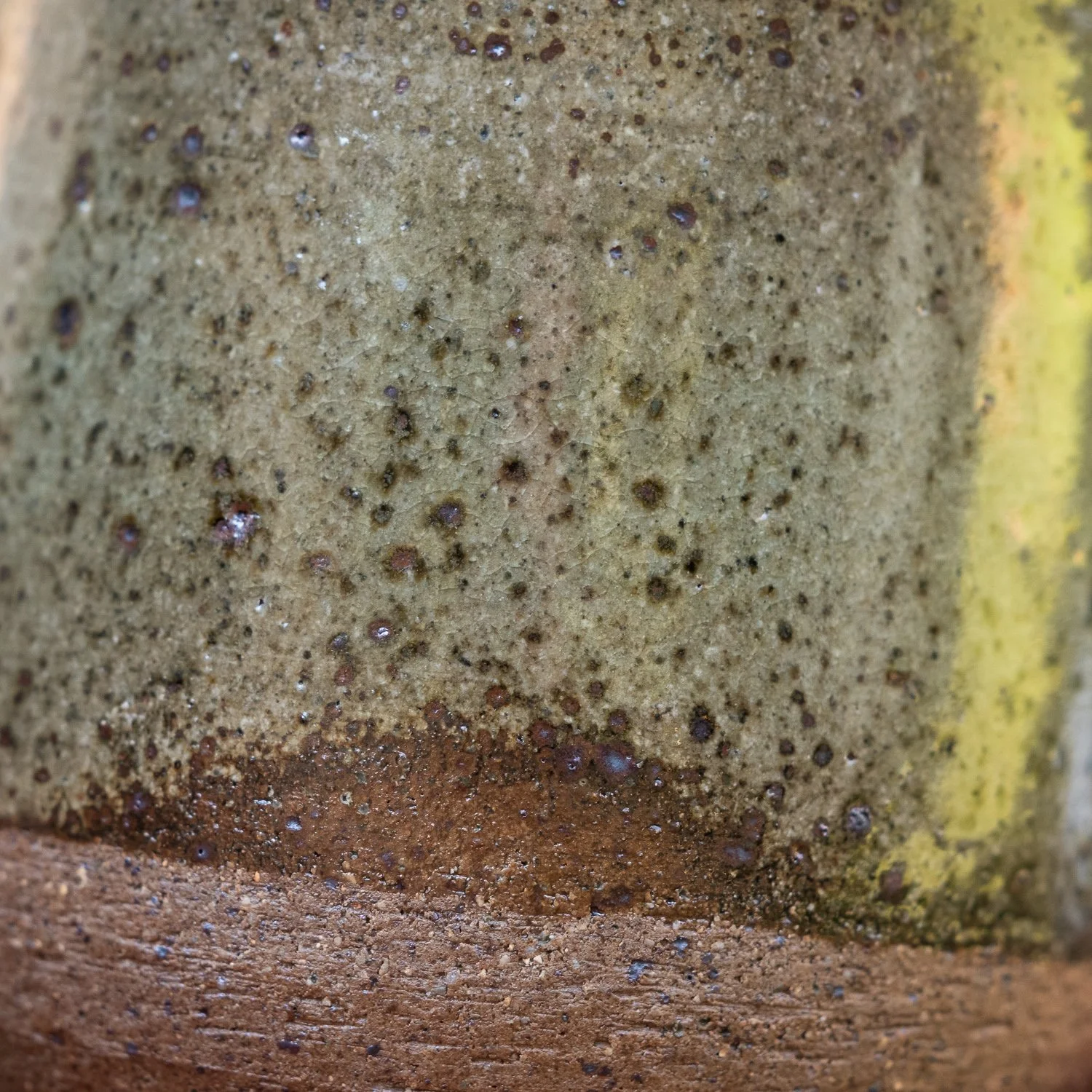
My classic hi iron clay and glaze combination
The Basics of a Glaze
Before getting into our particular glaze, it helps to understand the basic principles behind what happens in the kiln. At its simplest, a glaze is a carefully balanced combination of three fundamental components: a glass former, a flux and a stabiliser.
Silica is the main glass former. When heated to a high enough temperature, silica melts to form glass, but its melting point is far higher than the temperatures normally used for functional ceramics. This is where the flux comes in. Fluxes help lower the temperature at which the silica melts, allowing the glaze to form a glassy surface during a ceramic firing.
The third component is the stabiliser, primarily alumina. Without it, a glaze can become excessively fluid when molten. Alumina helps control the flow of the glaze and gives the finished surface greater stability.
The interesting part is that these three components are not necessarily added as separate ingredients. Different raw materials can contribute one or more of them, and the chemistry of the glaze comes from balancing what each material brings to the mix.
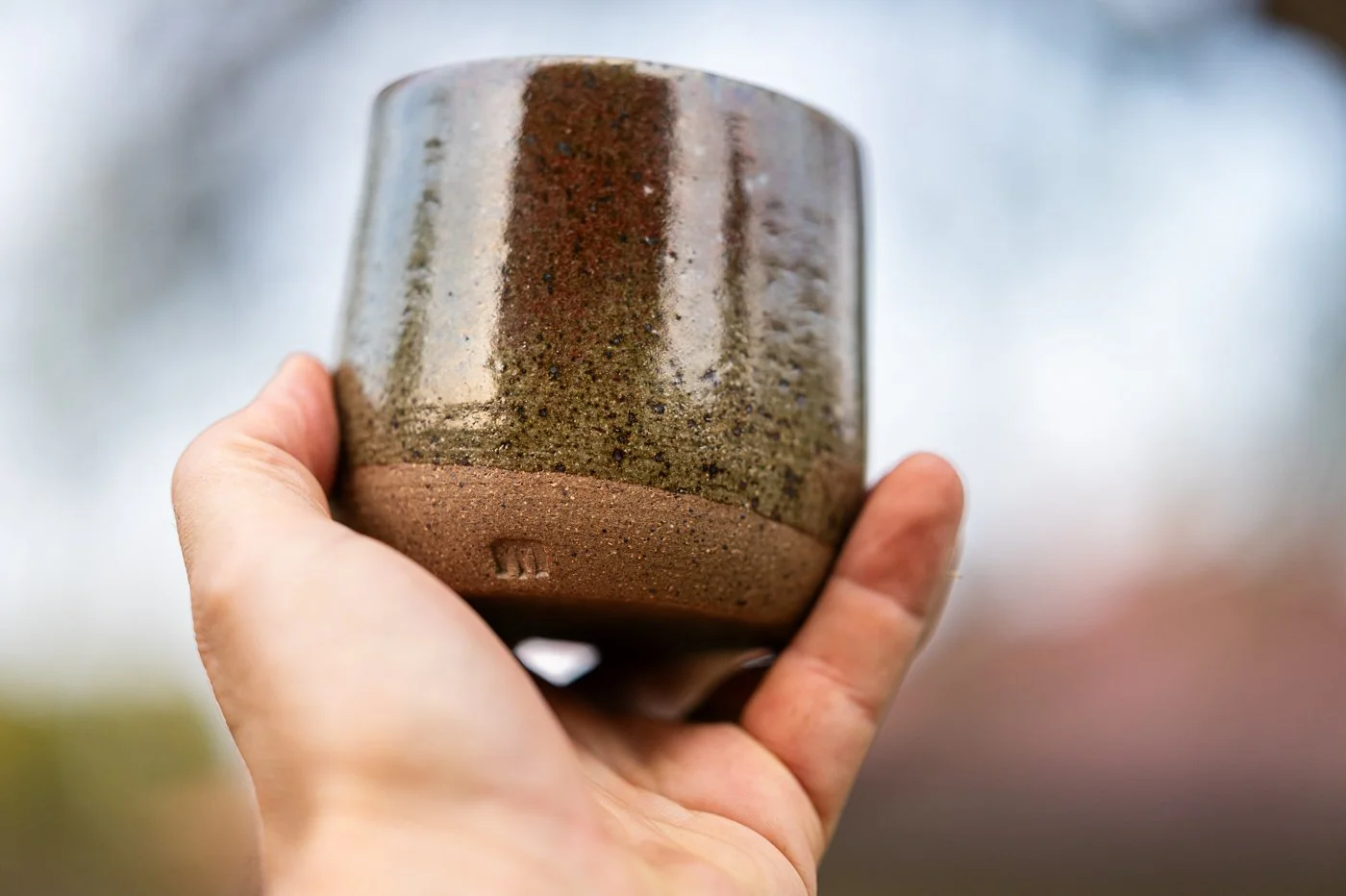
A well balanced glaze, with kisses of copper red …
Starting with our Base
My glaze development starts with a high-iron feldspathic base glaze built around Zimbabwean potash feldspar, Gwayi clay and natural wood ash. Each of these materials contributes different elements to the overall glaze chemistry, but they also bring their own characteristics to the finished surface.
The feldspar provides much of the foundation for the glaze, contributing silica and fluxes. The Gwayi clay provides alumina to help stabilise the glaze, but it also contributes a significant amount of iron. Combined with the iron already present in the feldspar, this gives the base glaze its characteristic colour and response in the kiln.
The ash adds another layer. Wood ash is not simply a substitute for a commercial glaze ingredient; it is a material produced by the landscape itself. The minerals absorbed by a tree as it grows remain in the ash after combustion, and those minerals can influence how a glaze melts, moves and develops colour. That makes every ash more than just another ingredient in a recipe. It carries something of where it came from.
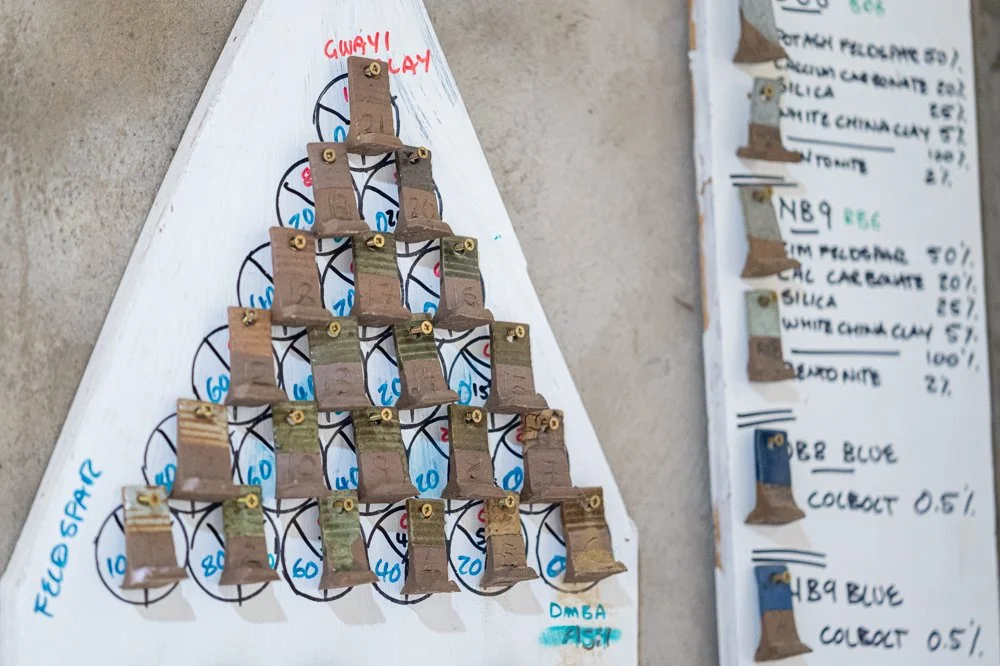
Base glaze test triaxial
Why Test So Much?
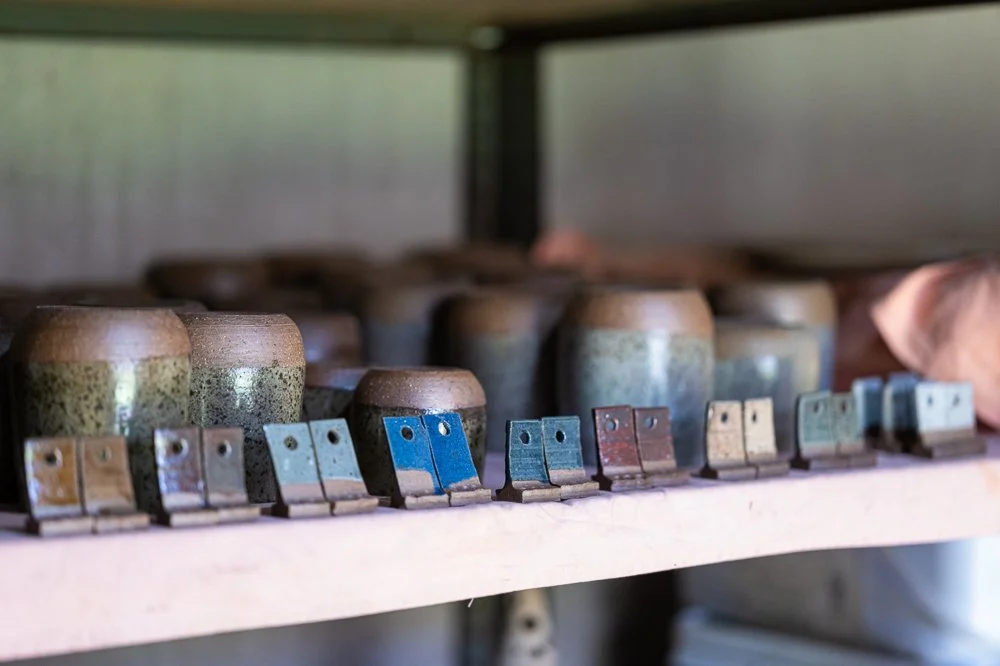
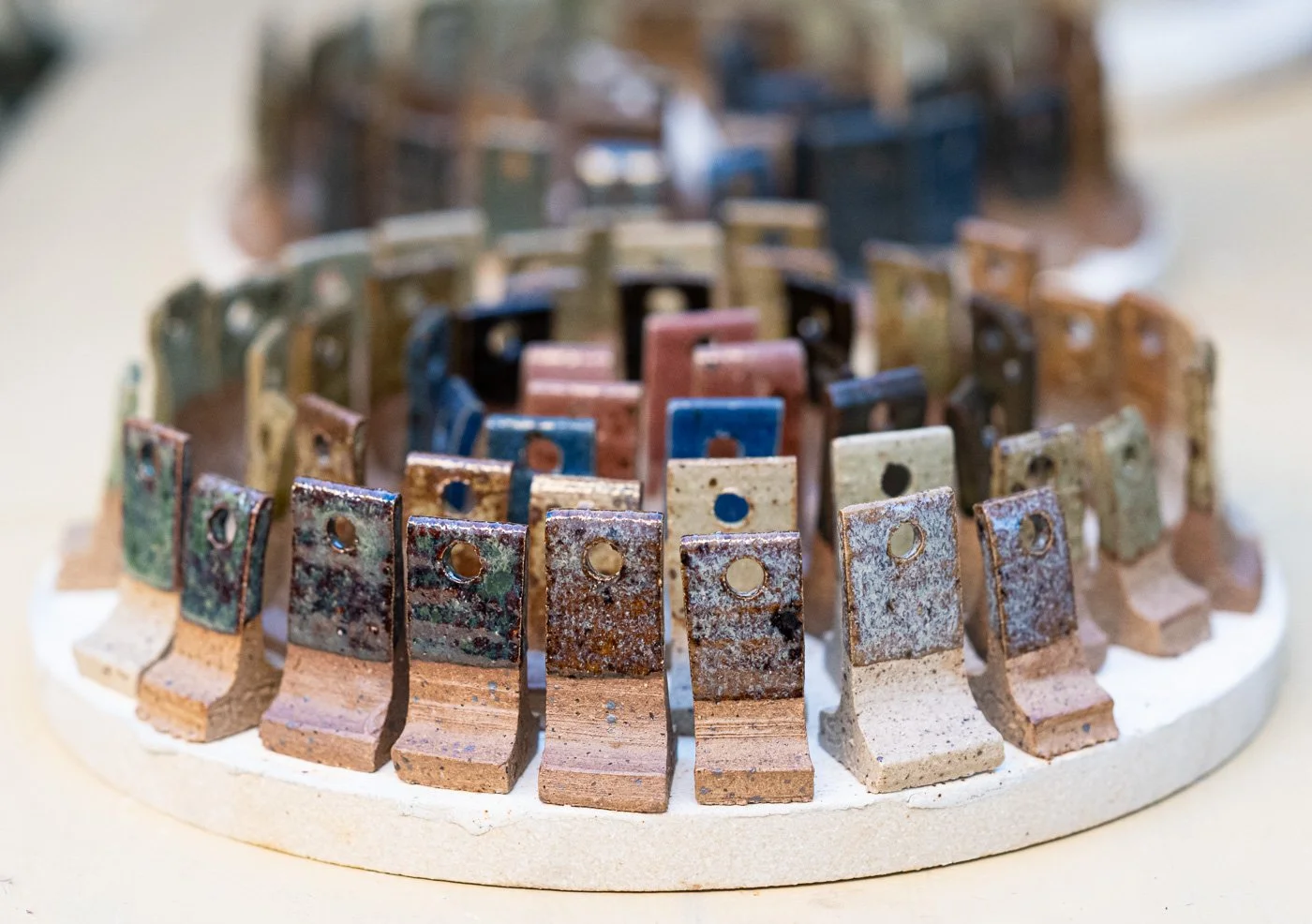
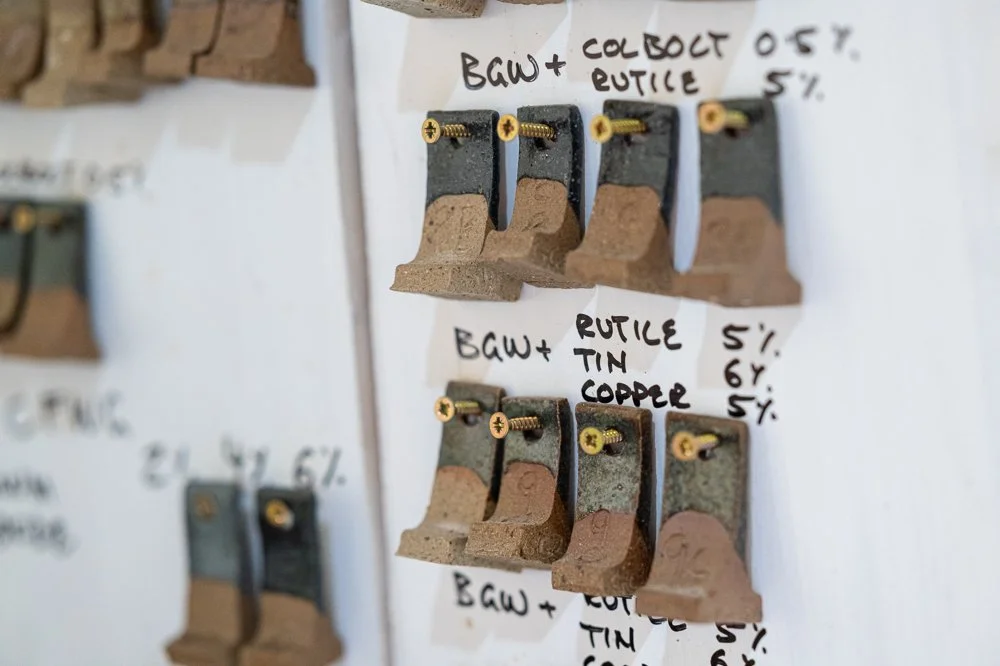
Glaze chemistry can be surprisingly sensitive. Small changes in the balance of materials can alter colour, surface, movement and the way a glaze responds during reduction firing. Rather than relying on a single fixed recipe, I use systematic testing to understand what happens when these materials are pushed in different directions.
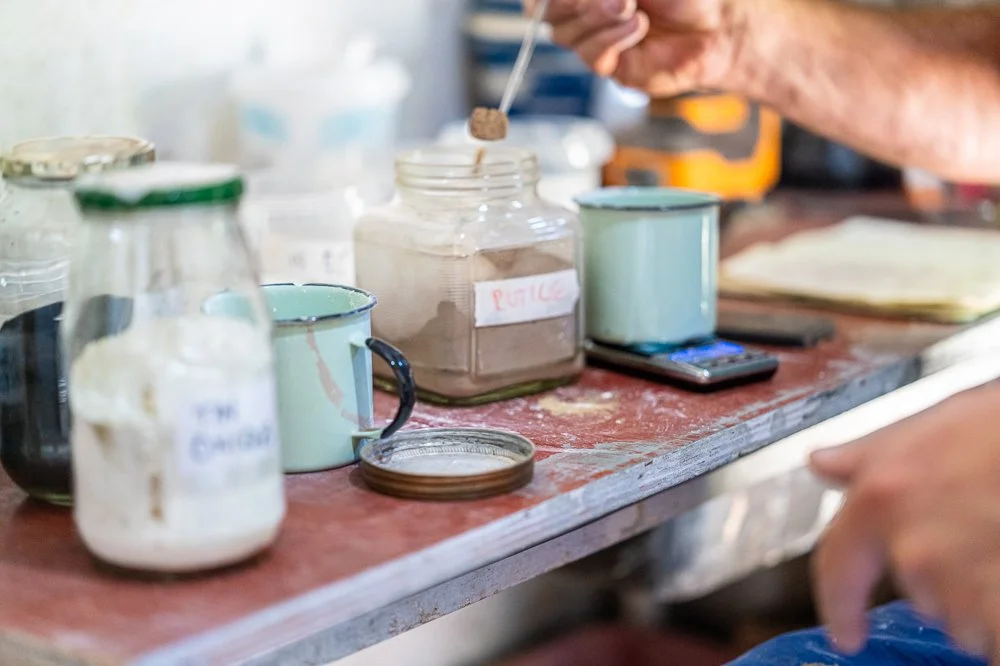
Triaxial testing is particularly useful for this. By varying the proportions of feldspar, clay and ash, I can map out how these three materials interact and identify areas where interesting combinations begin to appear. From there, individual tests can be developed further and other materials introduced to explore colour and surface.
Some tests confirm what I expected. Others do something completely different. That is part of the process.




Oxidation and Reduction
The atmosphere inside the kiln also plays an important role in how a glaze develops. In oxidation firing, there is plenty of oxygen available during the firing. In reduction firing, the oxygen supply is restricted, changing the chemistry of the kiln atmosphere and how certain metal oxides in the glaze behave.
This can have a significant effect on colour and surface. The same glaze can produce very different results depending on whether it is fired in oxidation or reduction, adding another variable to an already unpredictable process.
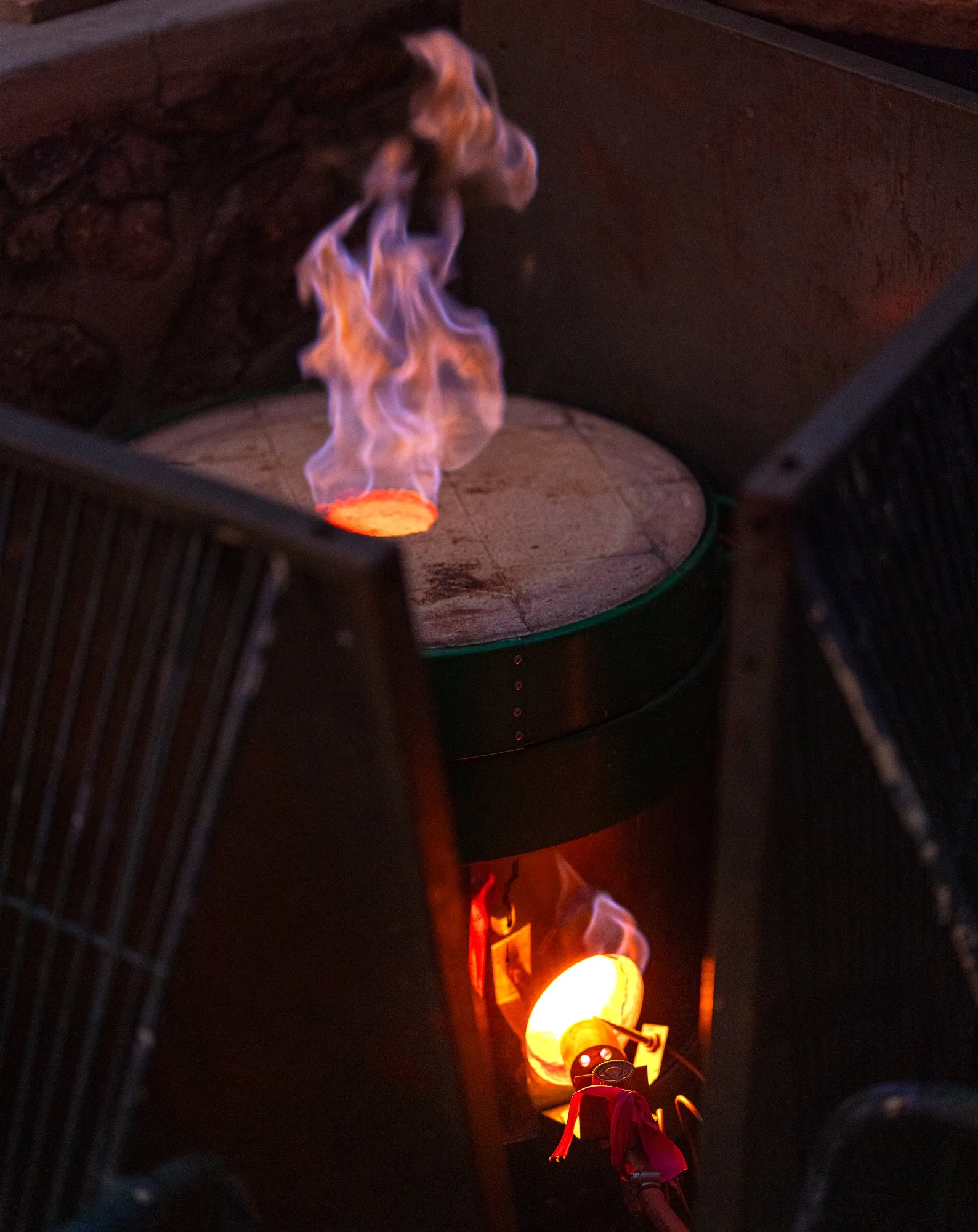
The kiln starts flaming through the ports when its starved of oxygen internally.
One Glaze, Many Possibilities
The aim isn't to create one glaze and stop there. Changing the source or proportion of an ash, introducing different clays, or adjusting the balance of the glaze can produce surprisingly different colours and surfaces. Reduction firing adds another layer of unpredictability, allowing the materials to respond in ways that cannot always be predicted.
This opens the possibility of developing regional glaze variations using local ashes and clays, while keeping a consistent technical foundation. The finished surface becomes a meeting point between material, chemistry, fire and place.
There is still plenty to investigate. Every batch of ash, every new combination and every firing adds another piece to the picture. And sometimes, after all the careful testing, the kiln produces something completely unexpected. Those are often the tiles worth keeping.
