Clay is where every Wenwe ceramic begins. Before there is a form, a glaze or a finished object, there is simply a lump of material in my hands. The way that material behaves has a huge influence on how I make, fire and ultimately use a piece.
When I started developing Wenwe Ceramics, I didn't want to simply choose a commercial clay body and accept its characteristics. I wanted to understand the materials I was working with and develop a clay body that suited the way I make ceramics and, importantly, the demands of functional tableware. The result is what I call the Standard Zimbabwe Clay Body.

Three Clays, Three Roles
The body is made from three different clay materials, each selected for a particular reason. Rather than looking for one clay that does everything, I combine materials with different characteristics to create a body that balances workability, strength and firing performance.
The first is a Zimbabwean stoneware clay, which forms the foundation of the body. It provides the underlying stoneware characteristics and gives me a consistent starting point for a clay body that needs to perform reliably at high temperature.
The second is Gwayi clay, a naturally occurring clay from the Gwayi region of north-western Zimbabwe. Of the three materials, this is perhaps the one that interests me most from a local-material perspective. Its most obvious contribution in the studio is plasticity and workability. On the wheel, it responds well to pressure and allows me to stretch, compress and shape the clay without it becoming unnecessarily difficult to work.
Gwayi is also the component I could potentially substitute if I were developing a clay body for a specific region. The proportions and firing behaviour would then need to be tested and adjusted for that particular material.
The third component is fire clay. I source this locally from a pottery that produces refractory bricks. Its refractory nature contributes to high-temperature stability, strength and resistance to deformation, which is important when firing functional stoneware.
In simple terms, the three materials are doing different jobs. The stoneware clay provides the foundation, the Gwayi helps make the body workable, and the fire clay helps it withstand the demands of high-temperature firing. The actual balance between them is something I have developed through testing and experience, and the formulation itself is one of the parts of my process I intend to keep to myself.
Why Develop My Own Clay Body?
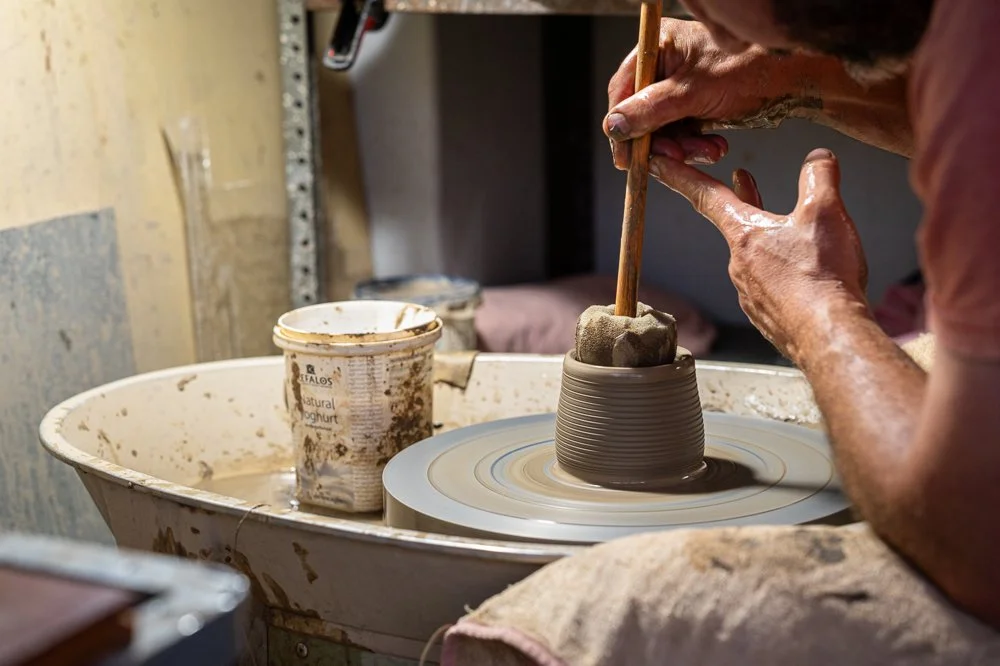
Developing a clay body is not simply a matter of mixing different clays together and seeing what happens. Every change can affect how the material behaves on the wheel, how much it shrinks, how it dries and how it responds to the kiln.
For functional ceramics, those variables matter. A mug or plate needs to survive being handled, washed, heated, cooled and used repeatedly. The clay needs to be strong and consistent, and it needs to mature appropriately at the temperature at which I fire.
That is why I have chosen to standardise my clay body across the Wenwe collections. It gives me a consistent technical foundation for my functional ceramics while allowing me to develop the individual character of each collection in other ways.
Why Not Simply Use Wild Clay?
There is a strong temptation, particularly when working with the idea of ceramics rooted in place, to use clay directly from every landscape I work with. Zimbabwe has an extraordinary variety of geology and natural materials, and the idea of digging clay from a particular location and turning it directly into a pot is incredibly appealing.
But there is an important distinction between a fascinating natural material and a reliable material for functional ceramics.
A wild clay may have an interesting colour, excellent plasticity or a remarkable response in the kiln, but that doesn't automatically mean it is suitable for making foodware. Its composition can vary, its firing behaviour may be unpredictable, and its absorption, strength and dimensional stability need to be established through testing.
For Wenwe Ceramics, that distinction is important because my ceramics are designed to be used. I want a mug to be a mug, not simply a beautiful object that happens to resemble one. Plates need to withstand everyday use, and bowls need to perform reliably over time.
I therefore don't want to make claims about the suitability of an untested wild clay simply because it comes from an interesting or meaningful place. If I introduce another natural clay into functional production, I want to understand it properly first.
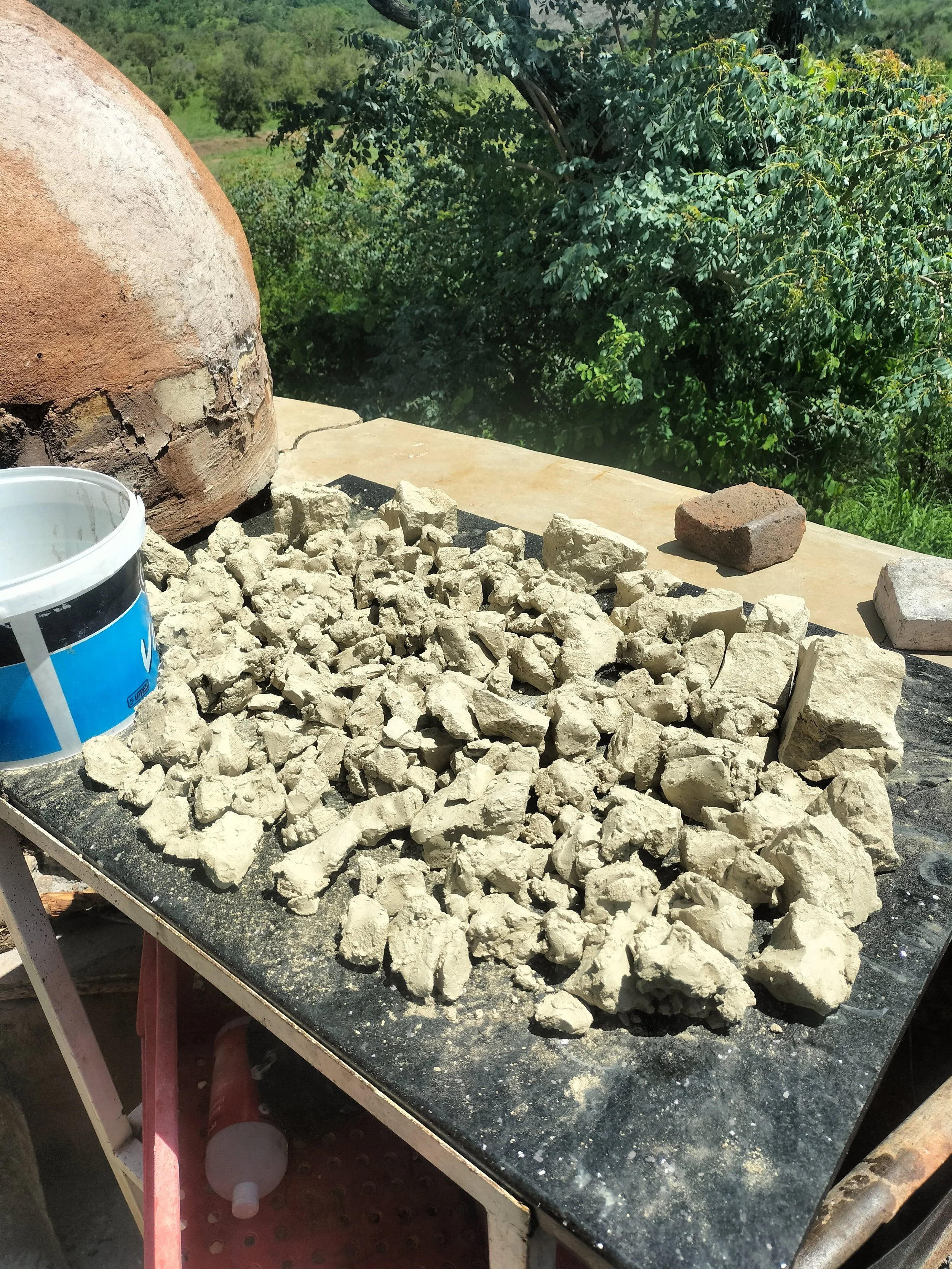
Wild Clay drying
Wild clay gathered from the landscape and left to dry before being processed and prepared for testing,
One Clay Body Across Wenwe
For now, the Standard Zimbabwe Clay Body will be used across the Wenwe collections. Whether I am making pieces for the Core Collection, developing a collection for a safari lodge or working on a future regional project, the underlying clay body will remain consistent.
This means I can continue to refine and test one material rather than constantly changing the technical foundation underneath my work.
It also means that the identity of a collection doesn't have to come from changing the clay itself. A collection can be shaped through its forms, surfaces, colours, firing, materials, imagery and, most importantly, the story of the place it represents.
Exploring Zimbabwe's Clays
Standardising my production clay doesn't mean I have lost interest in the natural clays found around Zimbabwe. In fact, it gives me a better opportunity to explore them properly.
There are clays from different parts of the country that I would like to collect, document and test simply to understand what they are. Where did they come from? What geological processes created them? How plastic are they? How much do they shrink? At what temperature do they mature? What happens to their colour and structure during firing?
Those questions are fascinating to me, even if the answer doesn't immediately result in a new production clay body.
If there is a particular region where the material, story and opportunity make sense, I could develop a clay body specifically for that region. It would come at a higher cost and would require considerably more testing, but that is part of what makes the idea interesting.
For now, the Standard Zimbabwe Clay Body gives me the reliability I need, while the exploration of regional clays remains an open part of the Wenwe journey.
From Earth to Object
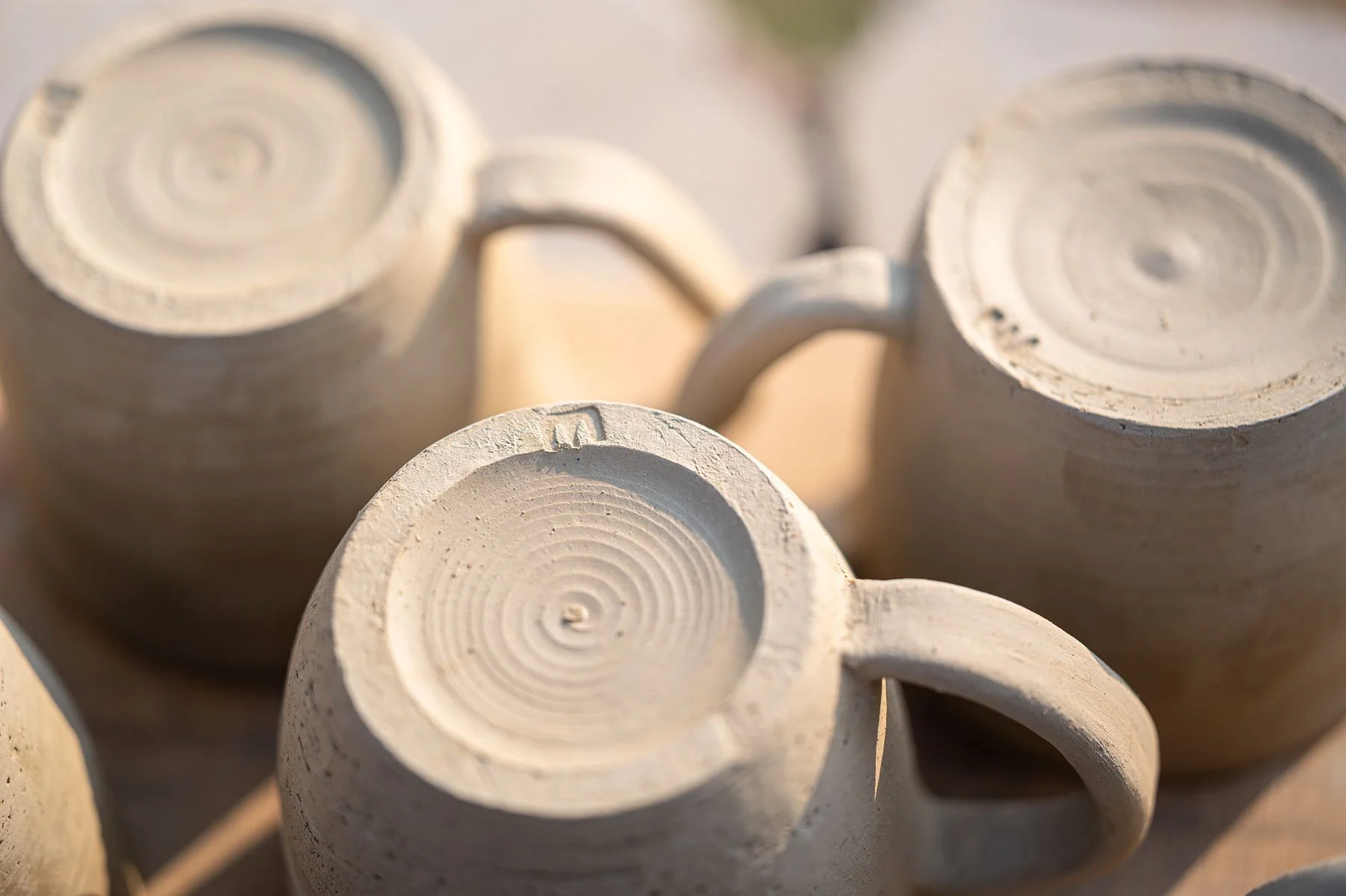
This is ultimately what makes clay so interesting to me. A finished pot can look simple, but the material behind it has a much longer story.
Geological processes create the deposits from which clay is obtained. Those materials are processed, combined and worked by hand. The kiln then transforms them again through heat, turning soft, workable earth into a hard ceramic object.
My role is somewhere in the middle of that process. I am trying to understand the material well enough to work with it rather than simply imposing a shape on it.
The Standard Zimbabwe Clay Body is therefore more than just a recipe. It is the technical foundation of Wenwe Ceramics and something I will continue to refine as I learn more about the materials I work with.
For now, I am happy knowing that the clay beneath every Wenwe piece begins with Zimbabwean materials, has been deliberately developed for the way I work, and has a story of its own.
The journey starts with earth and ends with an object made to be used.
Earth → Material → Process → Fire → Object → Story.
