I've always been drawn to making things. My mom has always been creative, and I think some of that naturally rubbed off on me. At Falcon College I was introduced to pottery, although I never imagined then that it would become such a big part of my life.
After school I followed another passion: the bush. I studied ecology in Australia and spent around fifteen years working as a guide, eventually specialising in photographic safaris. I spent much of that time in wild places, developing a deep appreciation for landscapes and the sense of place they carry. I also came to understand the safari and lodge industry from the inside — what makes a place special, what guests remember, and how the landscape becomes such an important part of the experience.
Life has a habit of changing direction. Having children makes you look at things differently, and the safari industry isn't always particularly easy to combine with family life. We returned to Zimbabwe in 2018 and continued working in the safari and tourism industry, eventually finding myself at Dimbangombe, just outside Victoria Falls.
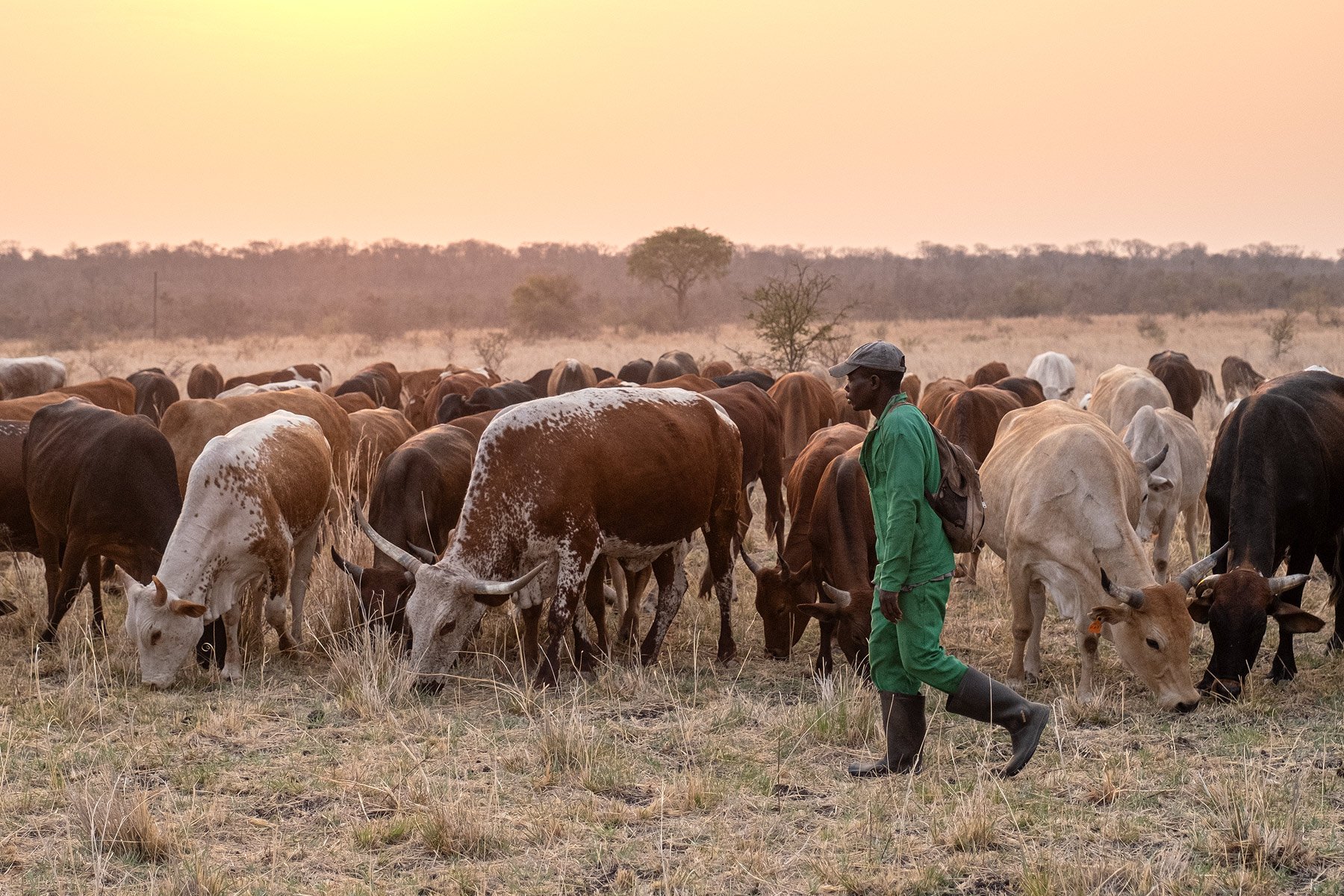
The Management herd on the Dimbangombe conservancy
With a little more time to explore various creative pursuits, I started dabbling in all sorts of things. Then some close friends introduced us to someone selling a pottery wheel and a small gas kiln. We bought them for an absolute bargain, and that was the start of it.
I had a pottery wheel, a kiln and absolutely no idea what I was doing.
The first challenge was simply finding the things I needed. Clay, glazes, tools and all the other bits and pieces that you suddenly discover are required when you decide you are going to make pottery. The obvious answer was to bring everything in from South Africa, but it didn't take long to realise that this wasn't a particularly viable option.
Then I started thinking about it. Human beings have been making pottery from the materials around them for thousands of years. They didn't have bags of commercially prepared clay arriving at their door or shelves full of glaze chemicals to choose from. They used what was available.
So, under the rather naive assumption of how hard can it be?, I started experimenting.

The pottery wheel all pack up to leave the Dimbangombe conservancy, with the very first mug that I made and glazed.
As it turns out, fairly hard.
But that question sent me down a rabbit hole that I'm still exploring today. I started learning about different types of clay and how they behaved, spending an enormous amount of time reading, experimenting and watching far too many YouTube videos. Before long, my interest had shifted from simply making pots to understanding what actually goes into making them. I began developing my own clay bodies, learning about firing and vitrification, and eventually became increasingly fascinated by glazes.
In particular, I became fascinated by ash glazes.
There was something about the process that seemed to bring together many of the things that had interested me throughout my life. Vegetation grows in a particular landscape, shaped by the soil and climate around it. That vegetation becomes wood, the wood is burnt, and what remains is ash containing minerals from that landscape. Those minerals can then become part of a glaze, which is melted by fire and finally becomes part of an object that someone can hold in their hands.
It is a remarkably long journey for something as ordinary as a tree.
The more I explored it, the more I realised that I wasn't simply interested in making pottery from local materials because it was an interesting technical challenge. I was interested in what those materials represented. After years spent working in wild places, I had become very aware that place matters. Every landscape has its own character, and its geology, soils, vegetation, colours and stories all contribute to that character. I started wondering how much of that sense of place could be carried into something as simple and familiar as a cup, a plate or a bowl.
The little gas kiln has imposed its own limitations along the way. I'm working primarily at cone 6, and I can't simply fire everything to whatever temperature I might want. But those limitations have also forced me to understand the materials I'm working with and to experiment rather than simply reach for a commercial solution. Over time, the experiments became more deliberate. The goal became to develop contemporary functional ceramics that weren't simply interesting experiments, but were technically sound, durable and capable of standing up to the demands of everyday use.
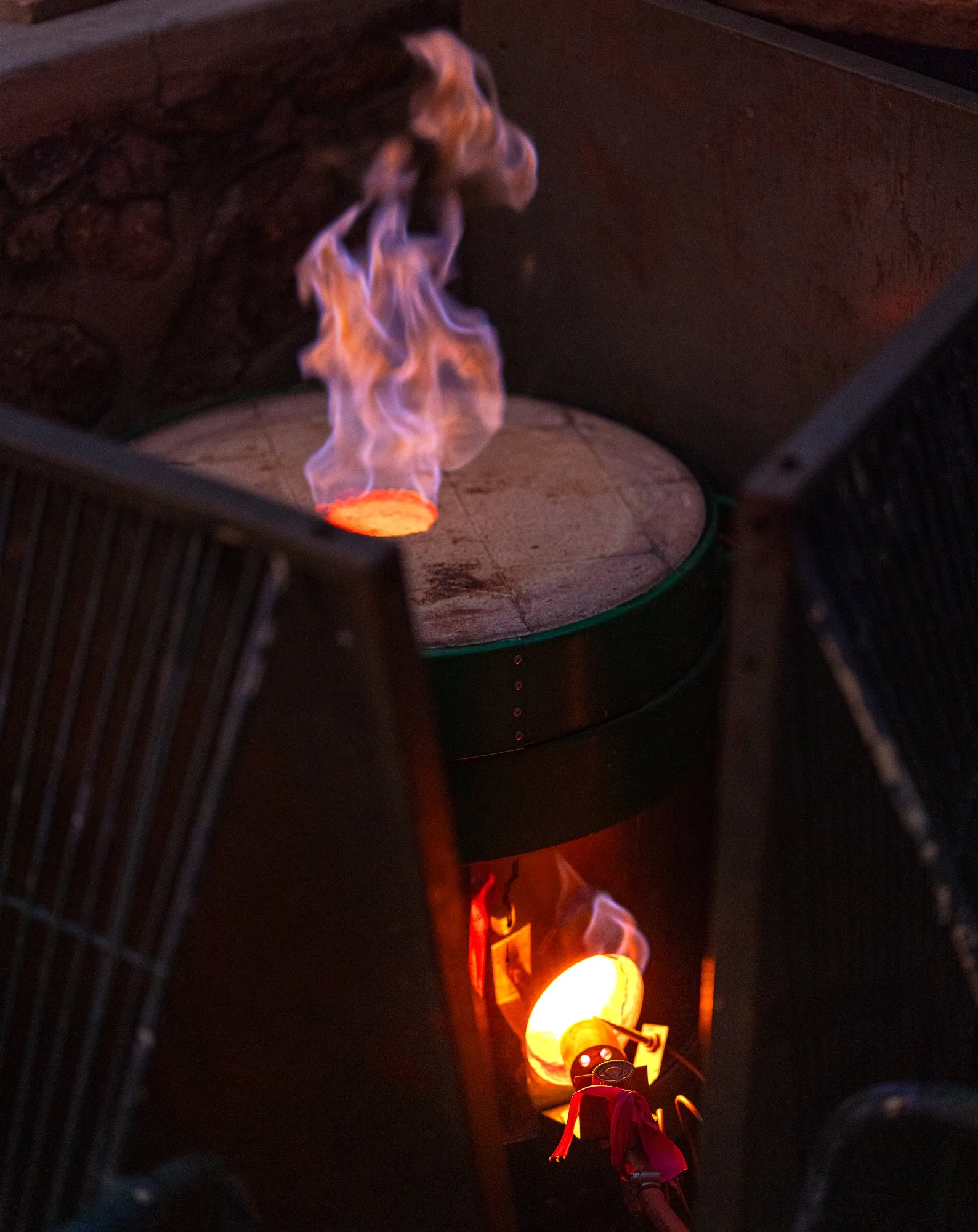
The little gas kiln goes into reduction when there is not enough oxygen inside the kiln. The oxygen-starved flame draws oxygen from the metal oxides in the glaze, creating those wonderful and often unexpected colours.
That eventually led me towards the safari and lodge industry, which perhaps isn't such a strange destination given where my own journey had taken me.
Zimbabwe has an extraordinary relationship between landscape and hospitality. Some of the country's most special lodges aren't simply places to sleep; their location is part of the experience. The landscape, wildlife, food, architecture and sense of place all contribute to what guests remember. I began to see that ceramics could be part of that experience too. A handmade cup at breakfast, a plate at dinner or an object sitting in a lodge shop can become more than just something functional. It can be a small, tangible connection to the place around it.
And somewhere along that journey, I started thinking about what to call it.
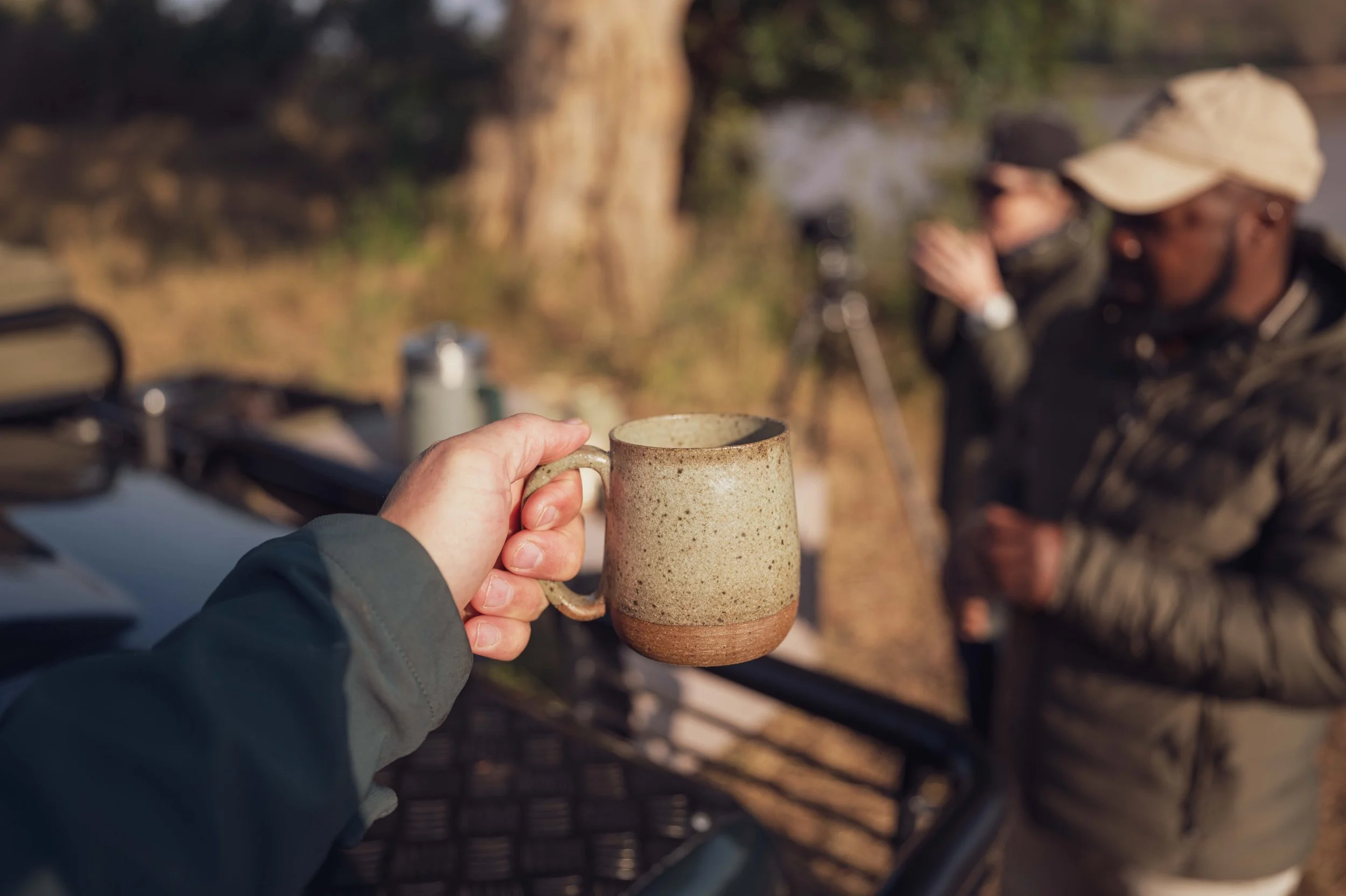
My classic Clay and Glaze combination, an iron rich feldspar glaze over a Zimbabwean stoneware clay.
The name Wenwe comes from a rather colloquial expression that, to me, belongs to a particular generation of Zimbabweans. Those of us who grew up in the 1980s were children of a country in transition, and many of our childhoods were filled with stories from an older Zimbabwe — stories of the bush, of growing up in the country, and of the years surrounding the end of Rhodesia and the Bush War. They were the stories our parents told us, often without much ceremony, because they were simply part of their lives.
And conversations about those memories would often begin with something like, "Do you remember when we...?"
When we were there. When we did that. When we used to...
There is something about that little phrase that immediately places you somewhere. It carries a sense of time, memory and place without having to explain exactly what that place is. Wenwe is my own play on that expression, and that idea felt right for what I wanted the ceramics to become.
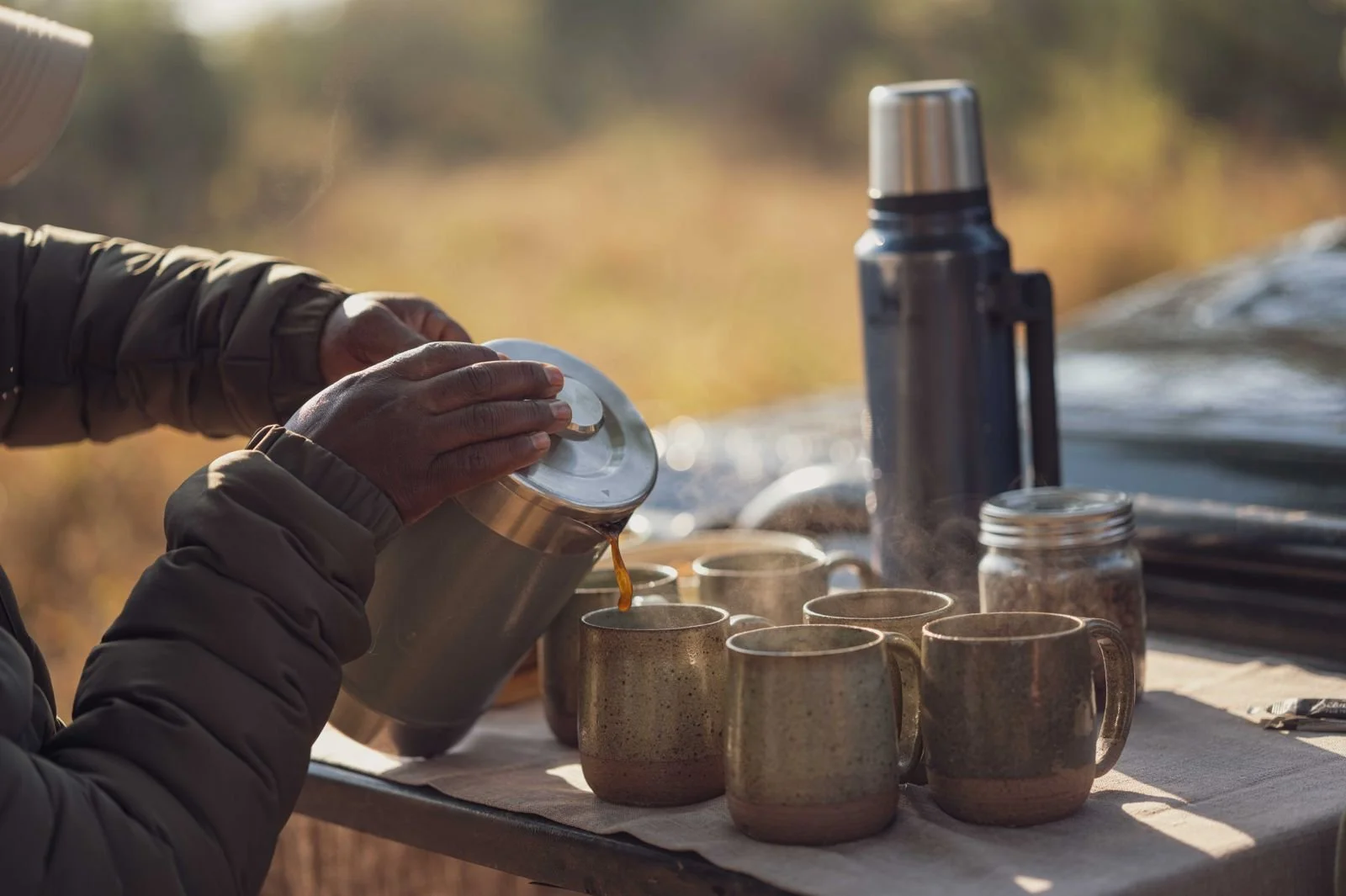
Ceramics designed to be used and to connect people to the special places and the memories those places hold.
Because ultimately, that is what I want a piece of Wenwe Ceramics to do. I want it to connect you to somewhere. It might be the landscape where the raw materials came from, the story behind a particular collection, a memory of a place you've visited, or simply the feeling of holding something that has a tangible connection to the land from which it came.
That idea has become the foundation of Wenwe Ceramics.
Ceramics that connect people to place.
